Middle Colonies Pictures | 1650s To 1770s

1. Map of the Middle Colonies (1755) A General Map of the Middle British Colonies, in America, compiled by Lewis Evans and engraved by James Turner, 1755. Philadelphia mapmaker Lewis…

Everything you've ever wanted to know about the American Revolution

Learn about the 13 original colonies that existed at the time of the American Revolution.
1. Map of the Middle Colonies (1755) A General Map of the Middle British Colonies, in America, compiled by Lewis Evans and engraved by James Turner, 1755. Philadelphia mapmaker Lewis…

1. While Virginia was the first of the Thirteen Colonies, most of the South was settled much later Virginia was first established in 1607, long before the settlers began moving…

The Province of Georgia had a more diverse economy than many of the other Southern Colonies, but was still heavily reliant on cash crops and plantation-based farming, especially from the…

The Colony of New Jersey had a diverse economy, predominantly focused on agriculture and maritime trade, and with a number of smaller manufacturing and natural resources industries taking off in…
1. New Jersey was originally controlled by the Swedish and the Dutch Parts of the colony were formally known as New Sweden and later New Netherland, before the territory was…
1. Georgia was the last of the Thirteen Colonies to be founded The colony was formally established in 1732, under the control of a group of British trustees led by…

Georgia was a pluralistic, diverse colony, inhabited by a wide range of different religious groups. However, Catholics were excluded from the colony from the very beginning. Founding and early history…

New Jersey was one of the most religiously diverse of the Thirteen Colonies, with no official church, and no significant religious majority. Founding and early history Prior to its capture…
1. South Carolina and North Carolina were originally part of the same colony The Province of Carolina was established in 1663, and originally contained parts of modern-day Georgia, Tennessee, Alabama,…
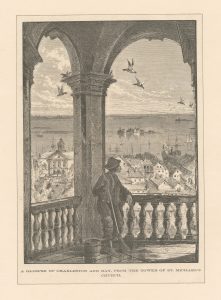
South Carolina was officially Anglican during the colonial period, and from the early 1700s, the Church of England was the official church of the colony. However, South Carolina was settled…

The economy of the Southern Colonies was primarily centered on the region’s plantation farms, with crops such as tobacco, indigo, and rice being key exports for the region. Plantations and…

The Southern Colonies had large swathes of flat, fertile land, which along with its warm climate and system of waterways, made the region perfect for plantation-based farming. Terrain The terrain…

The New England colonies were largely dominated by the Congregationalist Puritan movement, with a close connection between church and state, and little tolerance for religious dissenters. The exception was Rhode…

The Middle Colonies were religiously pluralistic, home to a diverse range of different religions, including Quakers, Presbyterians, Lutherans, and Mennonites, as well as a small minority of Jews and Catholics.…

The Southern Colonies in British North America were predominantly Anglican, but a wide variety of different religious sects coexisted in the region, including Presbyterians, Quakers, Baptists, and Catholics. Early years…
1. North Carolina was first settled by the British in 1585 Sir Walter Raleigh attempted to create England’s first settlement in the New World – a military outpost on Roanoke…

North Carolina was officially an Anglican colony. However, in practice, there was strong freedom of religion in the settlement, and Quakers became a dominant force in the colony’s early history,…
1. Delaware was first settled by the Swedish The area that would go on to become Delaware was first colonized in 1638 by Sweden, before the territory was captured by…

Delaware was a religiously diverse colony founded on Quaker principles, and was home to a number of other religious denominations such as Lutherans, Mennonites, and Presbyterians. Founding and British capture…

New York Colony had a diverse, varied religious history, in large part due to the range of different groups that settled in the province under both Dutch and British rule.…
1. Virginia was the first of the Thirteen Colonies to be settled Virginia was first colonized by an expedition of 105 British settlers in 1607, who established the colony’s first…

The economy of Virginia Colony was predominantly based on tobacco cultivation and export, though the province had a number of other smaller industries as well. Tobacco When Virginia was first…

During its early history, Virginia was a predominantly Anglican colony, with the Church of England established as the official religion of the province. Founding Virginia was first settled in 1607…
1. Massachusetts was founded as a Puritan model society Puritans were a type of devout Protestant Christians who believed in strict adherence to religious moral codes, and wanted to “purify”…

The Massachusetts Bay Colony’s economy was spread out across a number of different industries, with a large reliance on lumber, rum, and the seafood trade. Rum Massachusetts Bay had a…

Massachusetts Bay was a Puritan theocracy, with religion affecting many aspects of the colonists’ lives and society. Founding Massachusetts was settled by English Congregational Puritans in 1628. Puritanism was a…
1. New Hampshire was initially settled in 1623, but did not receive a royal charter and officially become a colony until 1679 The colony began as a series of small…

The Colony of New Hampshire had a relatively diverse economy, primarily centered on the lumber and fishing industries. Lumber New Hampshire had abundant forests, including many populated by white pine…

The Province of New Hampshire was initially settled mostly by Puritans, but was more accepting of other denominations compared to colonies like Massachusetts, and gradually became more religiously diverse as…
1. Pennsylvania was founded as a Quaker model society William Penn established the colony as a “holy experiment” in 1682, modeling Pennsylvania’s governance on principles of peace, democracy, and religious…

Pennsylvania was founded as a model society based on Quaker values in the New World, which quickly became one of the most religiously diverse of the Thirteen Colonies. Founding principles…
The colonial Pennsylvania economy was diverse, though it had a particularly heavy emphasis on staple food crops such as wheat and maize. Agriculture The soil in Pennsylvania was particularly fertile…
1. New York was originally called New Netherland New York was first colonized by the Dutch in 1624. They called the settlement New Nederland, and New York City was called…

New York Colony had a diverse economy centered on agriculture, fur, and maritime trade. Fur trade New York was first settled by the Dutch in 1624 under the name New…

Maryland Colony was founded in 1634 by English settlers supported by King Charles I, with the goal of creating a safe haven for Catholics in the New World. History Founding…

Connecticut Colony, also known as the Connecticut River Colony, was founded by English settlers in America in 1636. History Founding Massachusetts Bay was one of the first English colonies in…

The Colony of Rhode Island, also known as the Colony of Rhode Island and Providence Plantations, was founded by English settlers in America in 1636. History One of the first…

British mercantilist economic policy had a significant effect on the Thirteen Colonies in America, contributing to colonial resentment of the British government from 1763 onwards. What is mercantilism? Mercantilism is…

The geography of the Middle Colonies in British North America was characterized by rich, fertile soils and a large system of rivers and estuaries, which were significant economic assets for…

The government structure and political environment in the Middle Colonies varied from colony to colony, but generally emphasized greater levels of religious freedom and citizen participation compared to other regions…
1. The Middle Colonies were the most ethnically diverse in British North America While New England and the Southern Colonies were predominantly inhabited by migrants of English descent, with a…

The Middle Colonies of Delaware, New Jersey, New York, and Pennsylvania produced a diverse economic output, with a focus on farming, leading to this region becoming known as the “breadbasket”…

The Albany Plan of Union was a 1754 proposal to create a central government for the Thirteen Colonies in North America, spearheaded by Benjamin Franklin. Context In the early 1750s,…

The New England colonies’ geography restricted the types of crops that farmers could plant, and often made early settlement difficult, due to extremely harsh winters. However, the geography also opened…

The New England Colonies of Massachusetts Bay, Rhode Island, Plymouth Colony, New Hampshire, and Connecticut had largely democratic political systems. However, democratic participation was limited to certain social groups, and…

During the 18th century, the New England colonial economies of Massachusetts, Rhode Island, Connecticut, and New Hampshire relied heavily on the timber and fishing industries, with support from other areas…
1. Virginia Colony (1607) Virginia was the first of the Thirteen Colonies, established in the spring of 1607 when an expedition of 144 people, including 105 settlers and 39 sailors,…
The Committees of Correspondence were groups of Patriot leaders that sought to organize inter-colonial cooperation and resistance to British rule, in the lead-up to and during the American Revolution. Summary…

VIKING BANNER Newfoundland, circa 1000 A. D. This particular banner depicts a raven. A hardy bird that can subsist on any diet, mariners carried them in a world before latitude…